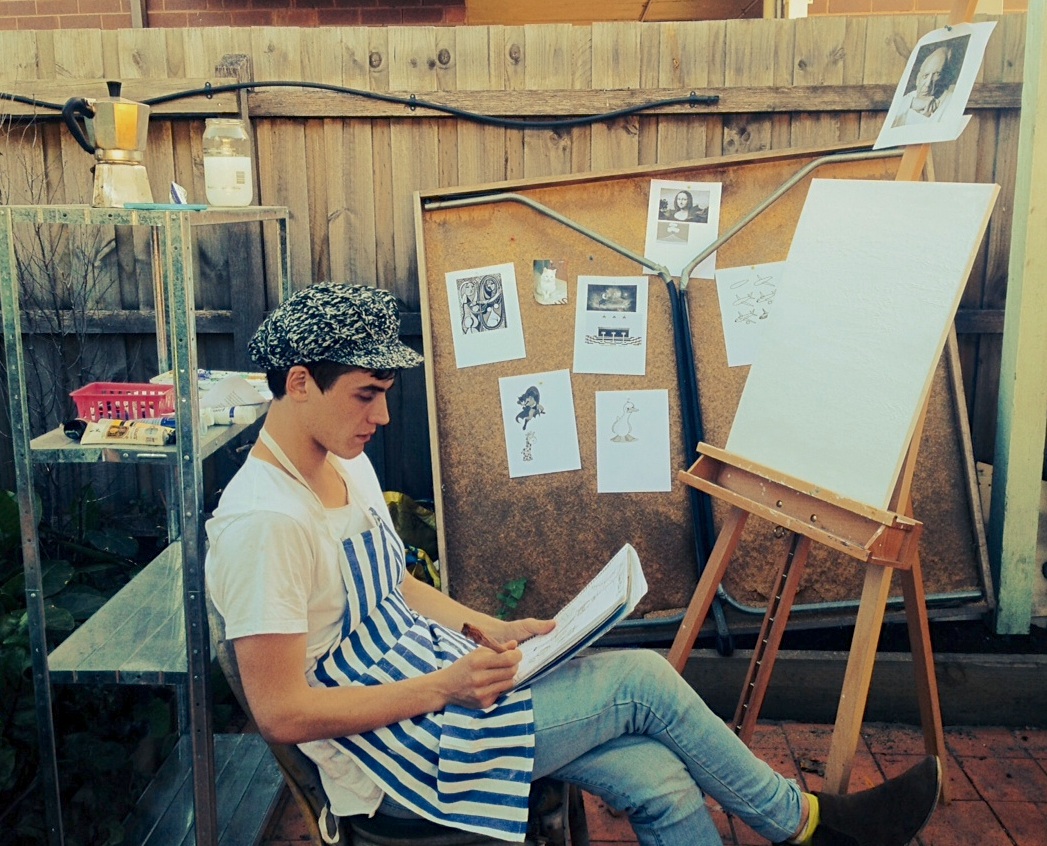
I tighten the strings to my smock, pick up my paintbrush and look at the blank canvas in front of me. I feel my hand shake a little. I’m nervous. A blank canvas can be anything. My mind tells me to lose the brush, dip my fingers into the palate and paint swirls… but I don’t. I’m not allowed to — the deal I’ve made with myself forbids it.
Today, I’m a painter. My goal is to finish a painting on canvas – in one sitting – and I want it to look impressive. I’ve never painted as an adult and probably won’t ever again. I already know that it’s not my calling in life.
So, why do a painting, then? Firstly, it’s hot outside and painting is a good outdoor activity. Secondly, I’m curious. I’ve lived with a few painters at different points in my lifetime, but I’ve never really understood the effort that goes into the art form. Doing a painting myself seems like a good way to put myself in another’s shoes for a day and perhaps understand the world a little better. And thirdly, what if I’m the next Picasso and just don’t know it yet?
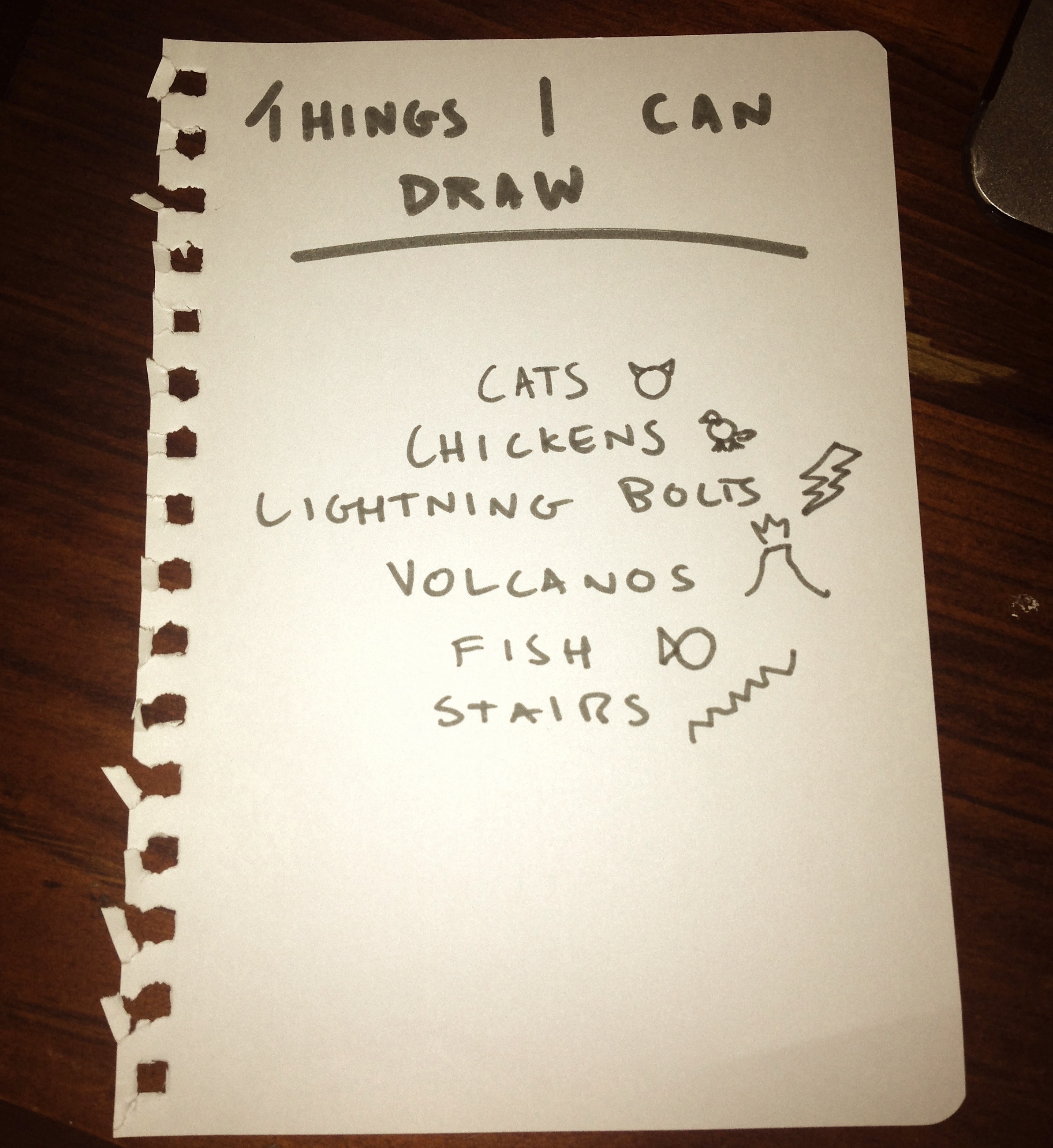
I begin by following one of the oldest tips in the book: When in doubt, play to your strengths. My artistic CV isn’t very impressive. As a teenager, I drew a few complicated pictures in Microsoft Paint. As an adult, I’ve produced two Where’s Wally fan art posters, an 8-page comic book and I once designed a poster – but that was using InDesign. Otherwise, it’s all just school curriculum and childhood drawings.
I make a list.
Next, I go searching for inspiration. I start by googling my favourite artist: Pablo Picasso. In Grade 2, I did my first ever school assignment on him and I’ve liked him ever since. Last year, while in Paris, I even went to a museum devoted entirely to him – which was, sadly, closed for renovations.
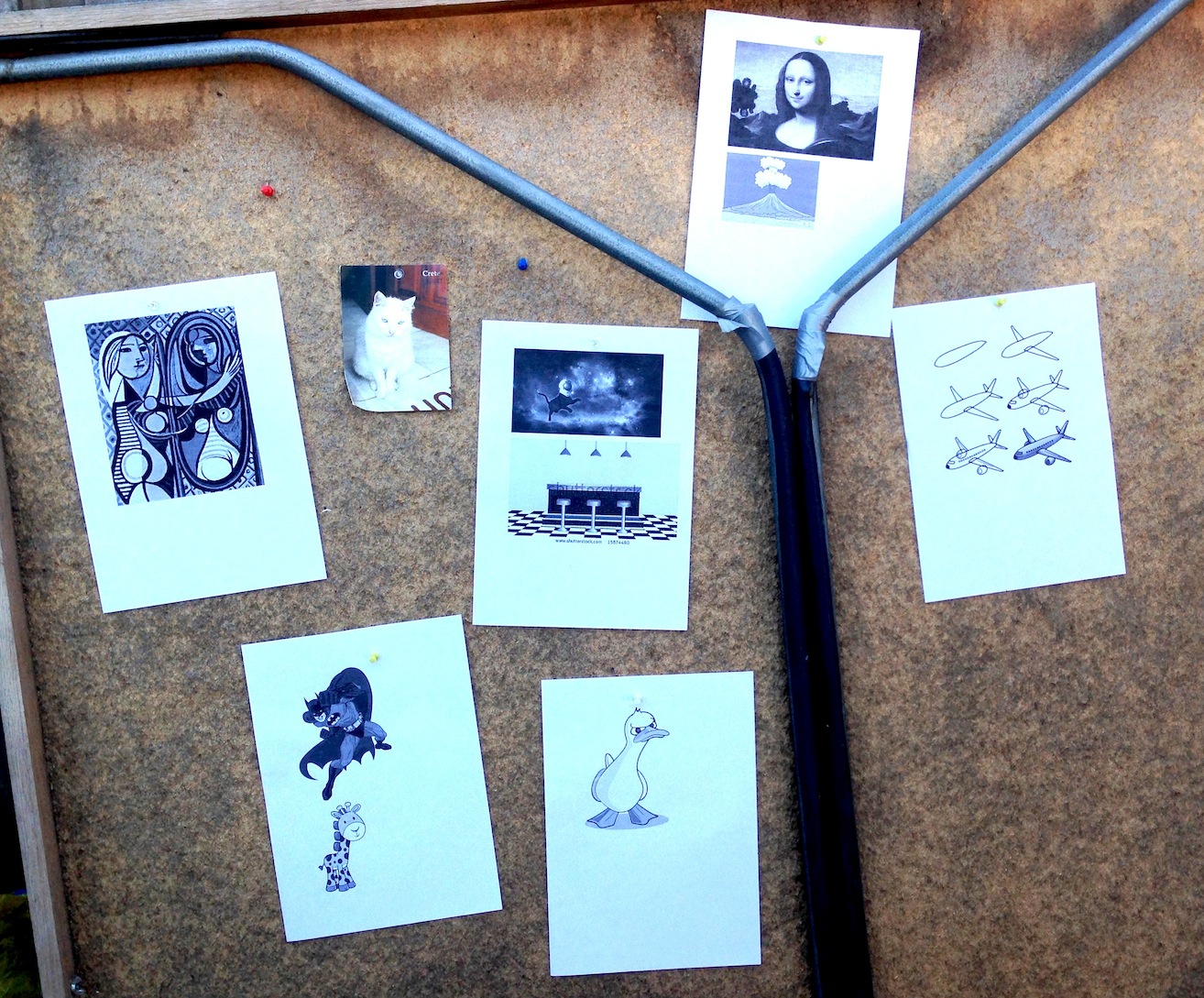
But googling Picasso’s art and cubism generally, I realise that I need my painting to stand out as original. Copying another’s artistic style just wouldn’t be impressive. So instead, I google a few random images and pin them up next to my easel – these will serve as my inspiration.
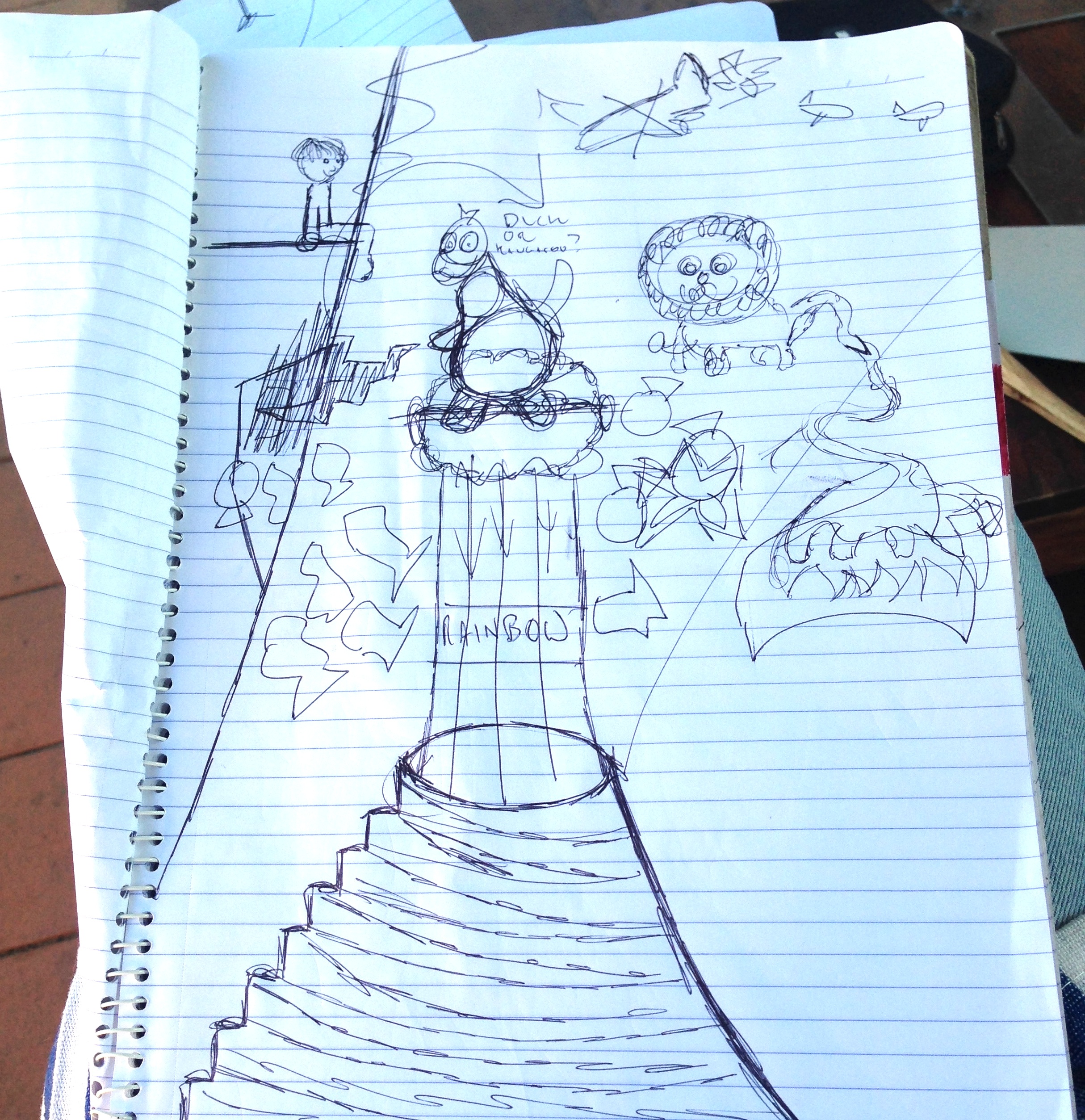
 Before I take brush to canvas, I do a 1-minute sketch onto paper. I combine a few of the images I know how to draw with some of the ones I found on the net. Mostly, I draw animals. They are universally liked. I decide that my painting should lean towards the surreal, as this puts less emphasis on errors and screw-ups. In a few areas, I try to make the images interrelate. This doesn’t go too well. I leave some parts blank, so there is room for creativity.
All set to go, I paint my first stroke. I feel better. The canvas is no longer blank and it’s lost its potential to be anything. After a while, I discover that painting requires patience – each stroke is a tiny stroke of labour. The brush constantly needs to be reloaded with paint. I learn to hold the brush in one hand and the palate in the other. This saves time. I take a moment to appreciate the extinction of the quill.
It’s not long before I make my first big mistake. Due to the size of my paintbrush and the strokes it makes, the images used in my initial sketch don’t fit onto the canvas. So, I squeeze in what I can and ditch the sketch.
As I paint, I let my creativity guide me. If a shape is empty, I fill it with colour. If a line is crooked, I paint a bigger one over it or another one alongside it. I paint with a lot of yellow, as that seems to catch the eye. I follow my heart and hope that everything will come together.
It doesn’t.
Two hours have passed. My painting looks terrible. The colours clash. My lines are jagged and ugly. There’s too much brown. I feel angry looking at it. Worst of all, it’s now dark and cold outside.
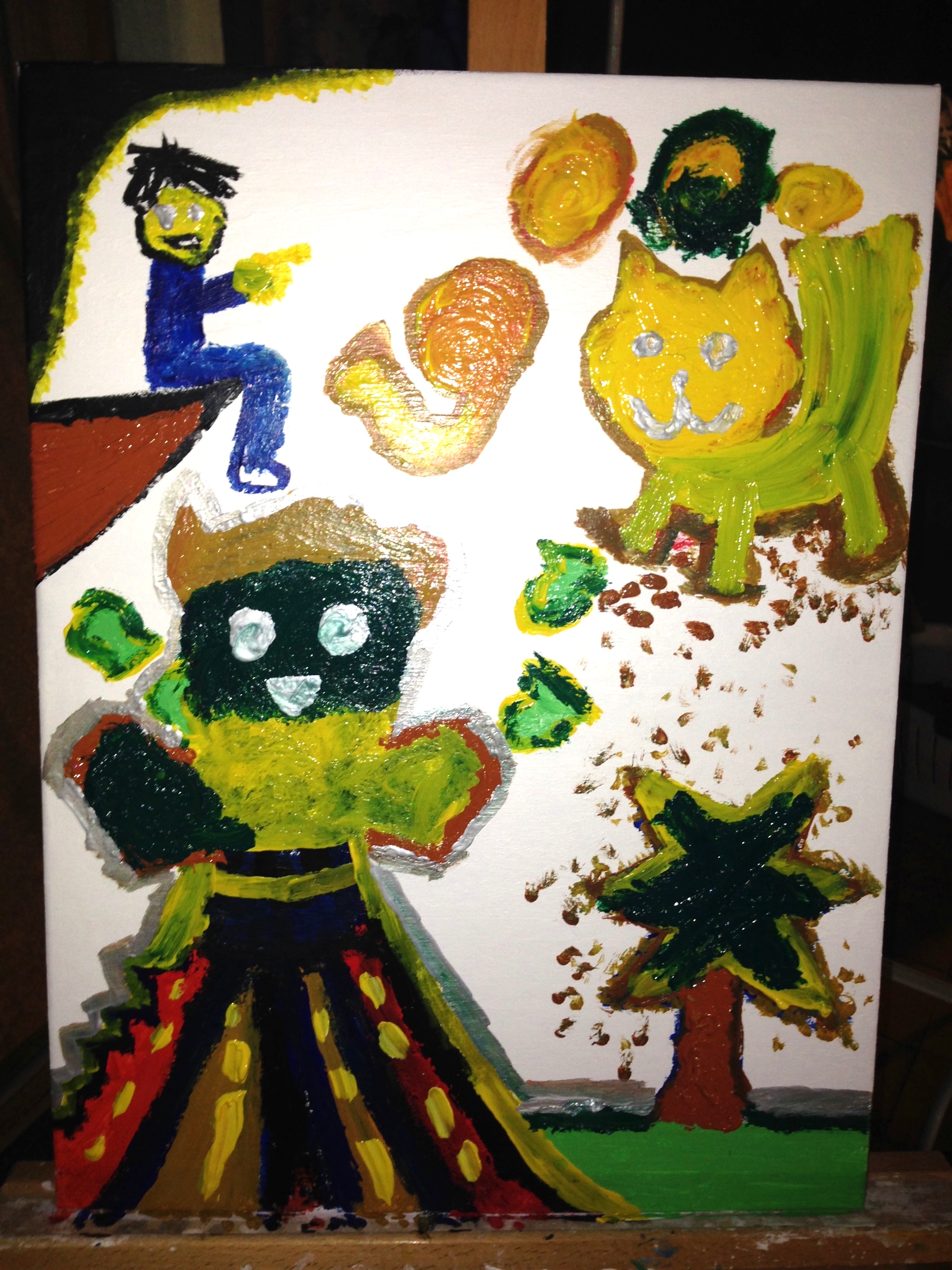
At this point, frustration kicks in.
I lose the hat and pick up the basket of paints. If a tube is less than half full, I empty the whole thing onto the palate. Previously, I washed my paintbrush with every colour change. I stop doing that. I paint as quickly as I can.
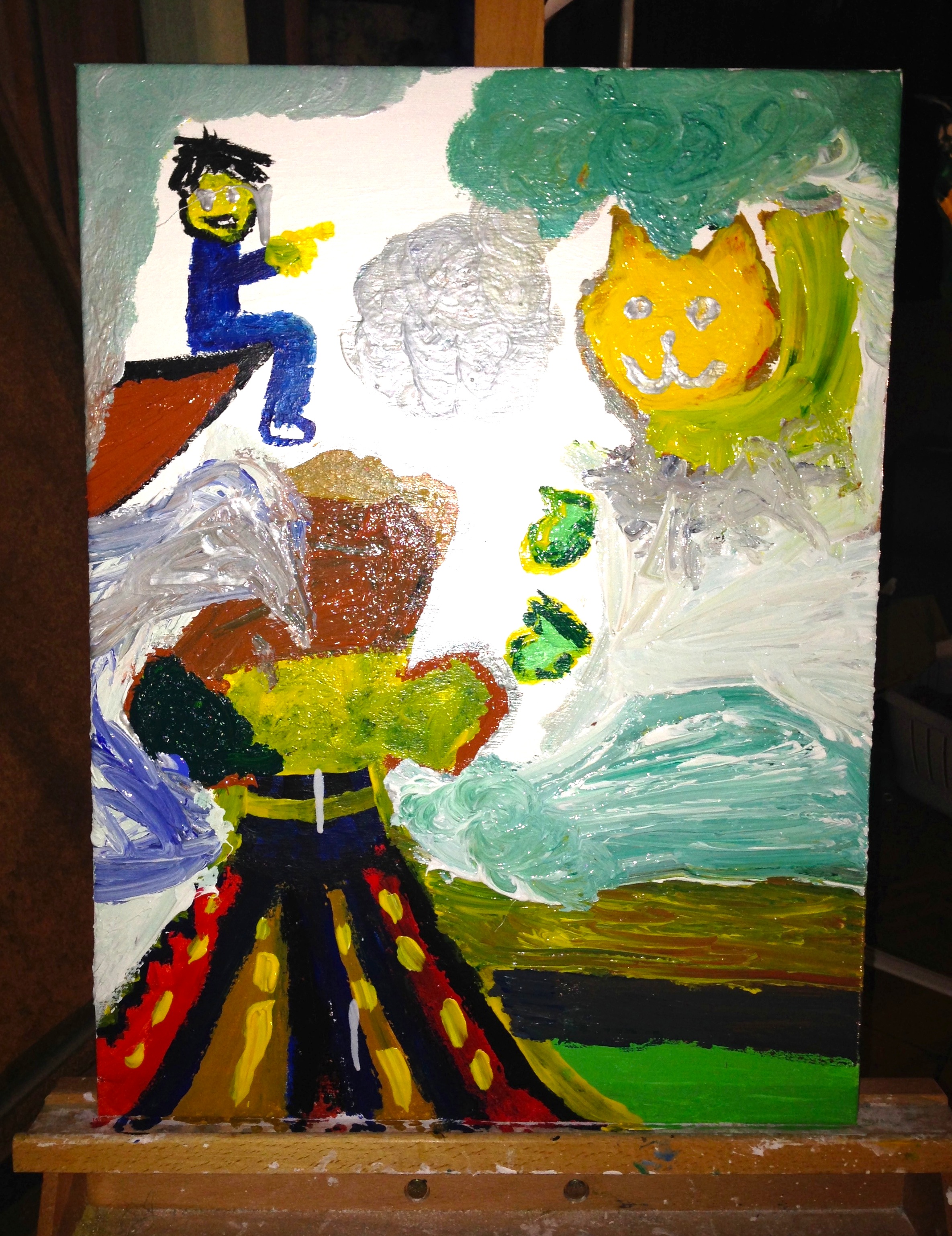 Swirls are fun to do, so I paint a lot them. If I make a serious wrong stroke, I simply redo all of the strokes around it. The palate is heavy, then light, then heavy again and then light again.
Finally, I am finished. Or, I’ve had enough anyway.
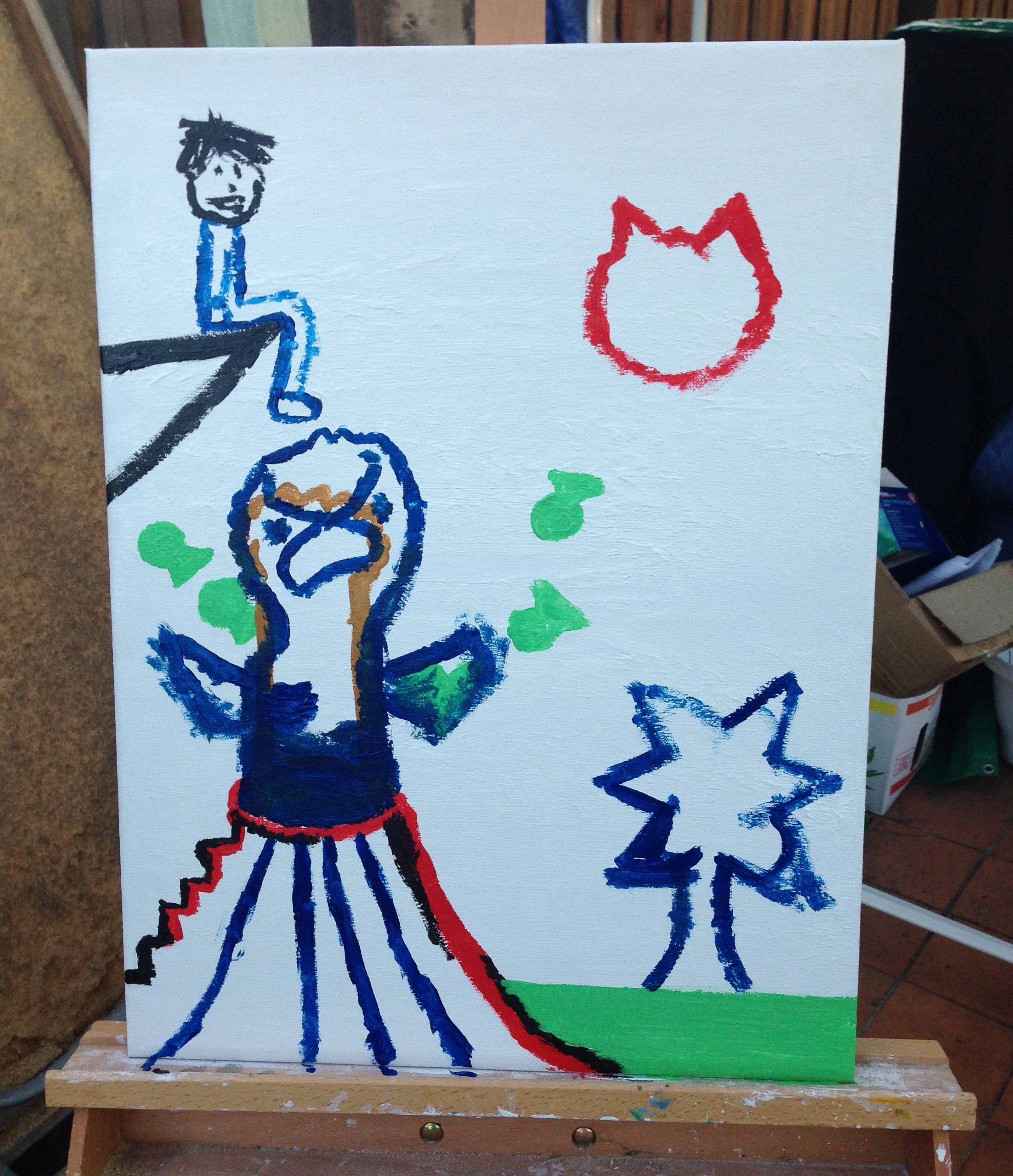
The finished product is a painting of what might be a boy looking out onto a volcano erupting while being engulfed by a violent ocean. Or, an ocean crashing into the side of a cliff, as a yellowy cat moon observes.
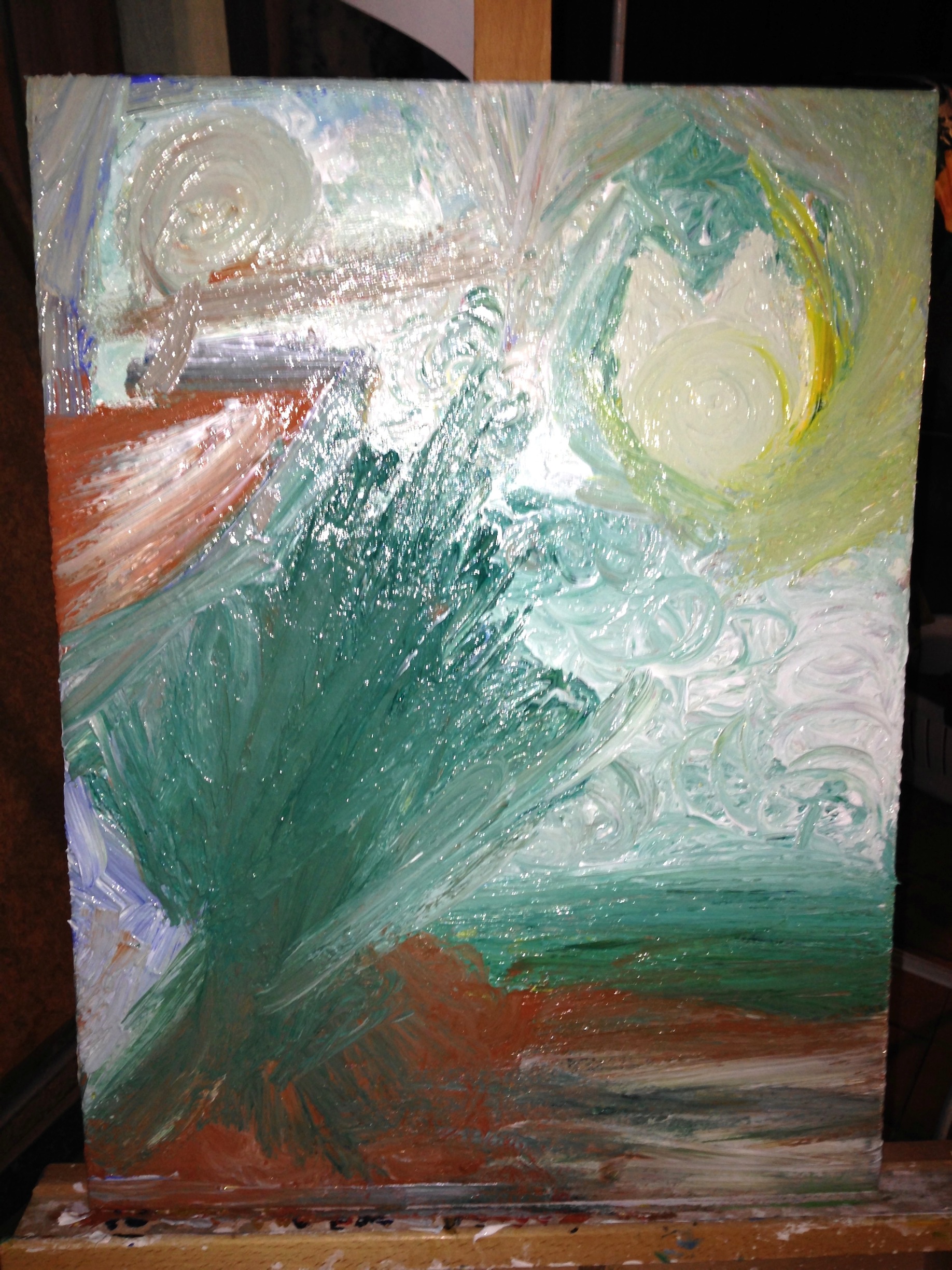
Is it impressive?
Well, I’m mildly relieved. The piece doesn’t look as horrible as it did at the halfway point and I no longer feel anger when I look at it. The duck is gone and there is a tiny semblance of flow between some of the imagery. I learned a valuable life lesson too: painting is hard. This is something I will never forget.
But obviously, no, my painting is not impressive. In terms of my goal, I failed. If someone else painted it and gave it to me as a present, I would pretend to like it, actually hate it and hide it for a few months, before throwing it away. The piece just doesn’t display any discernible talent and its meaning is utterly and hopelessly ambiguous.
Perhaps however, my painting would have one admirer. As the great man himself once said,
“The world today doesn’t make sense, so why should I paint pictures that do?”
~ Pablo Picasso